Best LUZZ Pickleball Paddles (2026)
A brand almost nobody can place, selling paddles with tour-standard certification and published balance numbers. Here is which LUZZ to buy, and where its spec sheets contradict themselves.
Disclosure: Drive Dink earns a commission from qualifying Amazon purchases at no extra cost to you. We accept no free products and no paid placements — commissions never change our picks. How this works.
The verdict: the LUZZ Pro4 Inferno is the best LUZZ paddle, and the only one in the range with a published swing weight and twist weight. It is a thermoformed 16.54in frame with a raw T700 face over a microporous polymer core, listed for both USAP and UPA-A play. Take the Pro 4 Tornazo instead if spin rather than pace is what you are buying. The budget pick is the Glider 2026, which is roughly two-thirds of Pro4 money and the only LUZZ here with an edge guard.
What LUZZ is known for. Publishing numbers that brands at this price usually do not. A swing weight of 119 and a twist weight of 6.2 appear on the Pro4 Inferno's retailer spec sheet alongside a weight range, a handle length and dual tournament certification - and those are the figures that actually predict how a paddle plays. The brand builds around a microporous polymer core it calls MPP, with thermoformed construction and raw Toray T700 faces on the Pro4 line.
Where we are cautious. LUZZ is new enough that nobody has a multi-season durability record on it, its Amazon listings lean hard on marketing language, and on two of the three paddles here the published specifications disagree with each other between the brand's own site and the retailers. We say where, on the card and in the table below, rather than smoothing it over. If you want a brand with a longer public record at similar money, our best Vatic Pro paddles shelf is the closer-documented alternative.
Units we claim to have tested: 0. Specs are the maker's and retailers' published figures, and the scores are our own editorial read of those figures rather than measurements. Prices come from our live layer with an as-of date under each button.
| # | Paddle | Best for | Score | Price |
|---|---|---|---|---|
| 1 | 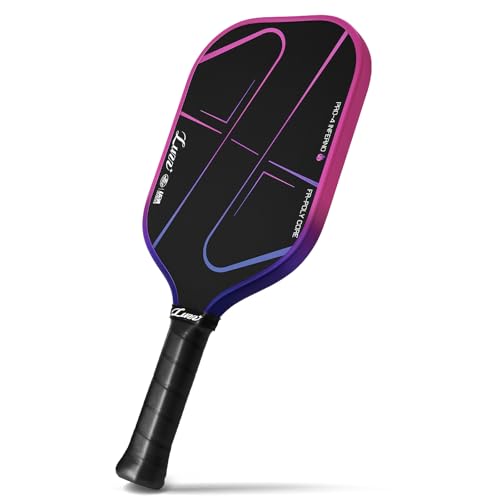 LUZZ Pro4 Inferno 16mm LUZZ's power frame, on a microporous polymer core | Best LUZZ paddle overall | 8.0 | |
| 2 | 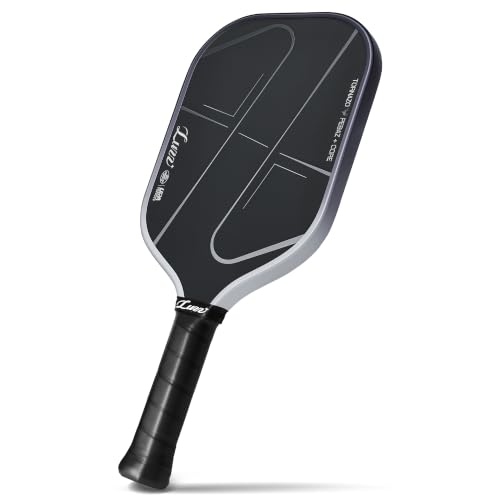 LUZZ Pro 4 Tornazo 16mm The grooved-face Pro4, for spin-first players | Best for spin-first players | 8.3 | |
| 3 | 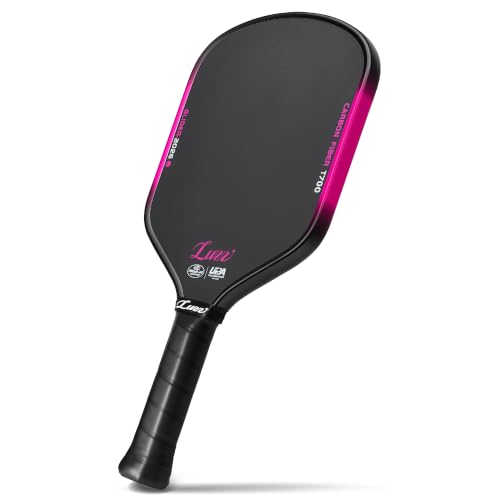 LUZZ Glider 2026 16mm Budget pick: the cheapest LUZZ worth buying | Budget pick: the cheapest LUZZ worth buying | 7.8 | $119.00 · View on Amazon #adPrice as of November 20, 2026 |
Tap any row to jump to the full write-up. Prices are pulled live from Amazon.
LUZZ Pro4 Inferno 16mm
A thermoformed 16.54in frame with a T700 face over a microporous polymer core, published at a 119 swing weight - the heaviest-swinging paddle LUZZ sells and the one built to finish points.
The Pro4 Inferno is the paddle that put LUZZ on tour-player spec sheets, and the published figures explain why: a thermoformed build, a raw T700 carbon face, an MPP (microporous polymer) core at 16mm, a 16.54 x 7.48in frame on a 5.52in handle, a 7.93 oz average, and a swing weight of 119 against a 6.2 twist weight. That swing weight is high for a paddle under 8 oz, which is what a long frame with mass out at the tip produces - power you have to be strong enough to carry through three games.
Who it is for: the player who wants a long, heavy-swinging power frame and cares that the numbers are published. The Pro4 Inferno is the paddle LUZZ built its reputation on: a thermoformed 16.54 x 7.48in frame with a raw T700 carbon face over an MPP microporous polymer core at 16mm, a 5.52in handle, a 7.93 oz average, and - unusually for this price - a published swing weight of 119 and twist weight of 6.2. Retailer certification fields list it for both USAP and UPA-A play, which is the pair most value brands manage only half of. On our scale it takes a 9 for both spin and power. The cons follow directly from that swing weight. A 119 is high, and on a paddle under 8 oz that means the mass is out at the tip - it drives beautifully and it is slow to recover in a hands battle, which is why we score it a 7 on control and forgiveness. Two Amazon listings carry this same model name at slightly different prices without stating what differs between them, so check the colorway on the listing you land on. And LUZZ has no long public durability record at any price.
- Core
- 16 mm
- Shape
- Elongated
- Face
- Raw Toray T700 carbon fiber
- Weight
- 7.93 oz avg (7.83-8.03 oz)
- Build
- Thermoformed
- Gen
- Pro4 (MPP microporous polymer core)
Retailer certification fields list the Pro4 Inferno as approved for both UPA-A and USAP sanctioned play (checked 2026-11). Approvals and delistings change - verify against the current USAP equipment list before tournament play.
LUZZ Pro 4 Tornazo 16mm
The Pro4 that leads with its surface: a 3D grooved carbon face on the same 16.54in frame as the Inferno, published a hair lighter.
LUZZ publishes a 16.54 x 7.48in frame, a 7.94 oz average, a 16mm thickness, a 5.51in handle and a 4.25in grip for the Tornazo - the same outline as the Inferno, with a different face and core recipe. The face is a 3D grooved carbon rather than a flat raw weave, which is a mechanical approach to grip instead of a chemical one. The two sources disagree about what is inside it: the Amazon listing says an EPP foam core, while LUZZ's own Pro 4 page describes a dual-layer elastic core with a dual-zone power ring, so this entry names both rather than picking one.
Who it is for: the player whose game is shaped by topspin rolls and dipping drives rather than by flat pace. The Tornazo shares the Inferno's published outline - 16.54 x 7.48in, 16mm, a 5.51in handle and a 4.25in grip at a 7.94 oz average - and changes the two things that decide feel: the face and the core. The face is a 3D grooved carbon rather than a flat raw weave, which is a mechanical approach to grip rather than a chemical one, and LUZZ pairs it with what it describes as a dual-layer elastic core and a dual-zone power ring. We score it a point behind the Inferno on power and a point ahead on both control and forgiveness. The cons start with the thing we cannot resolve: the Amazon listing calls the core EPP foam while LUZZ's own Pro 4 page describes a dual-layer elastic core, and we are not going to pick the flattering one - our card names both. LUZZ also publishes no swing or twist weight for this model, where it does for the Inferno, and we could not verify a certification field for it specifically.
- Core
- 16 mm
- Shape
- Elongated
- Face
- 3D grooved carbon fiber
- Weight
- 7.94 oz avg (+/-0.18 oz)
- Build
- Thermoformed
- Gen
- Pro4 (core described differently by listing and brand)
LUZZ lists its Pro 4 series for sanctioned play, but we could not verify a certification field for this specific model (checked 2026-11). Verify against the current USAP equipment list before tournament play.
LUZZ Glider 2026 16mm
The value Glider: a coated grit face on a honeycomb core at roughly two-thirds of Pro4 money, with an edge guard the Pro4 paddles do without.
The Glider is LUZZ's value frame and the only one in the range that does not use a raw carbon surface - it runs a 984-Aero coated grit face instead, which is a sprayed texture rather than an exposed weave, over a polypropylene honeycomb core at 16mm. Published figures are a 16.34 x 7.68in frame, a 5.31in handle, a 4.13in grip and a 7.9 oz average, with UPA-A and USAP approval listed. Retailer fields disagree with themselves on the core (an 8mm honeycomb listed inside a 16mm paddle), so take the construction as honeycomb and the thickness as 16mm and nothing finer than that.
Who it is for: a player who wants into this brand without Pro4 money, and who would rather have an edge guard than not. The Glider 2026 is the value frame: a published 16.34 x 7.68in outline - shorter and wider than the Pro4 pair - on a 5.31in handle and a 4.13in grip, 16mm thick, 7.9 oz average, with UPA-A and USAP approval listed and, unlike the Pro4 paddles, an edge guard. It is the only LUZZ here that does not run a raw carbon surface: the face is a 984-Aero coated grit, which is a sprayed texture rather than an exposed weave. That is also the main con. A coating is a wear part in a way a raw weave is not, and we score it a point below the Pro4 paddles on spin for exactly that reason. The retailer spec fields also contradict themselves on this model - an 8mm honeycomb core listed inside a 16mm paddle - so we record the construction as honeycomb and the thickness as 16mm and claim nothing finer. It is the lowest-powered paddle on this page by our scoring.
- Core
- 16 mm
- Shape
- Hybrid
- Face
- 984-Aero coated grit over carbon
- Weight
- 7.9 oz avg (7.7-8.1 oz)
- Build
- Not published
- Gen
- Glider 2026
Retailer certification fields list the Glider 2026 as approved for both UPA-A and USAP sanctioned play (checked 2026-11). Approvals and delistings change - verify against the current USAP equipment list before tournament play.
What LUZZ actually builds
Three published construction details define the range, and one of them is genuinely unusual at this price.
A microporous polymer core on the Pro4 line. MPP is LUZZ's name for a core made of a foamed polymer rather than a plastic honeycomb. It sits in the same family as the EPP and EVA cores the premium end of the market has moved to: no cell walls to fatigue, and a more uniform response across the face, which is the argument for foam in general. Our foam core and Gen-3 guide covers what foam changes and what it does not, and best foam core paddles ranks the field.
Thermoformed construction with a raw T700 face. Both Pro4 paddles publish a hot-molded unibody build and an exposed Toray T700 weave, which is the standard premium spin recipe. The Tornazo adds a 3D groove pattern to that face - a physical texture cut into the surface rather than relying on the weave alone. Thermoformed paddles explains what the process does to stiffness, and T700 carbon fiber covers what the grade name means.
Published balance figures, on one model. The Pro4 Inferno publishes a 119 swing weight and a 6.2 twist weight. Almost nothing else in its price class publishes either, and the pair tells you more than the static weight does - 119 is a high swing weight, which is why a 7.93 oz paddle swings like a heavier one. Swing weight and twist weight is the page for what those numbers mean in a rally. LUZZ does not publish them for the Tornazo or the Glider, and we have not estimated them.
The three, side by side
Published figures only, including the two places the sources disagree. Live prices and buy buttons are in the quick picks table above.
| Spec | Pro4 Inferno | Pro 4 Tornazo | Glider 2026 |
|---|---|---|---|
| Published frame | 16.54 x 7.48in | 16.54 x 7.48in | 16.34 x 7.68in |
| Handle length | 5.52in | 5.51in | 5.31in |
| Core | 16mm MPP microporous polymer | 16mm - listing says EPP foam, brand says dual-layer elastic | 16mm PP honeycomb (fields disagree on cell size) |
| Face | Raw Toray T700 carbon | 3D grooved carbon fiber | 984-Aero coated grit |
| Listed weight | 7.93 oz avg (7.83-8.03) | 7.94 oz avg (+/-0.18) | 7.9 oz avg (7.7-8.1) |
| Swing / twist weight | 119 / 6.2 | Not published | Not published |
| Grip / edge guard | 4.13in / not listed | 4.25in / not listed | 4.13in / yes |
| Our spin / power | 9 / 9 | 9 / 8 | 8 / 7 |
| Our control / forgiveness | 7 / 7 | 8 / 8 | 8 / 8 |
Which LUZZ fits your game
The Pro4 paddles share an outline, so the choice between them is face and core rather than shape. Three honest paths.
If you finish points with drives, take the Inferno. A 119 swing weight on a long frame is a power spec, and the MPP core is the more modern of the two constructions in the Pro4 line. Our best power paddles ranking is the wider field, and most powerful paddles goes further up the ladder.
If your shots land flat, take the Tornazo. A grooved face is a different mechanism from a raw weave for the same job, and the Tornazo scores a point better than the Inferno on both control and forgiveness on our scale, which makes it the more forgiving of the pair to live with. Best spin paddles ranks the market on grip, and how paddle spin works explains why the surface decides it.
If the price is the constraint, take the Glider and know what you are trading. A coated grit face does not grip like an exposed weave and it is a wearing surface, so the spin you buy on day one is not the spin you have in a year - our grit durability guide covers how to tell when a face has gone smooth. In exchange you get an edge guard, a wider frame and a paddle that costs meaningfully less, and our best pickleball paddles under $150 ranking shows what else competes at that money.
Where the spec sheets disagree, and what we did
This section exists because two of the three paddles on this page have published specifications that contradict each other, and a brand roundup that hides that is not doing its job.
The Tornazo's core. The Amazon listing title says EPP foam. LUZZ's own Pro 4 page describes a dual-layer elastic core with a dual-zone power ring and does not use the word EPP. Those are not obviously the same thing, and the difference matters to anyone buying for the construction rather than the shape. Our card names both descriptions and attributes each, rather than choosing.
The Glider's core. The retailer spec table lists an 8mm PP honeycomb core and a 16mm core thickness in adjacent fields on the same page. The most likely reading is that 8mm refers to the honeycomb cell size rather than the core depth, which is how some makers describe it, but since nobody states that explicitly we record the construction as honeycomb and the thickness as 16mm and leave it there.
The two Inferno listings. Amazon carries this model under more than one ASIN with identical titles at slightly different prices, and the titles do not say what differs - colorway is the likely answer. We link the listing we verified in stock, and our buy row falls back to a tagged search for the exact model if it dies. Check the colorway on the page you land on before ordering.
Who should skip LUZZ
Three groups, stated directly. Players who need a long public record - this brand does not have one yet, and anyone telling you how a LUZZ holds up over three seasons is guessing. Players who want a forgiving paddle, because the Pro4 frames are long and narrow and the most forgiving LUZZ is also its least powerful - buy width instead, which most forgiving paddles ranks directly. And players who want to buy on construction alone, since two of the three cores here are described differently by the brand and the retailers.
If what attracted you to LUZZ is a foam core at value money with full documentation, the honest alternative is Vatic's V-Sol Pro line, which runs a floating EPP core inside an EVA perimeter ring and has measured figures from a third party behind it. If the attraction is a raw T700 face at the lowest possible price, the Holbrook Aero line undercuts the Glider and keeps the exposed weave.
Which LUZZ pickleball paddle should I buy?
The Pro4 Inferno for most players who want this brand. It is the only LUZZ with published balance figures - a 119 swing weight and a 6.2 twist weight - on a thermoformed 16.54 x 7.48in frame with a raw T700 face over a microporous polymer core, listed for both USAP and UPA-A play. Take the Pro 4 Tornazo if spin rather than pace is the thing you are buying, or the Glider 2026 if you want the brand at roughly two-thirds of the price.
Is LUZZ a good pickleball paddle brand?
On published specs, yes, with a caveat about age. The Pro4 line publishes a thermoformed build, a raw Toray T700 face, a microporous polymer core and dual tournament certification, plus a swing weight and twist weight that most brands at this price keep quiet. The caveat is that LUZZ is new: there is no multi-season durability record, and on two of its three paddles the brand's own site and its retailers describe the core differently.
What is the difference between the LUZZ Inferno and the Tornazo?
Face and core, not shape. Both publish the same 16.54 x 7.48in outline, a 16mm thickness, a roughly 5.5in handle and a weight just under 8 oz. The Inferno runs a flat raw T700 weave over an MPP microporous polymer core and publishes a 119 swing weight. The Tornazo runs a 3D grooved carbon face over a core described as EPP foam by its Amazon listing and as a dual-layer elastic core by LUZZ, and publishes no balance figures.
Is the LUZZ Glider worth it over the Pro4?
Only if the price gap matters to you. The Glider is the value frame: a published 16.34 x 7.68in outline, a 5.31in handle, an edge guard the Pro4 paddles do without, and UPA-A plus USAP approval listed. What it gives up is the hitting surface - a 984-Aero coated grit rather than an exposed carbon weave, which grips less and wears, so we score it a point lower on spin and two lower on power.
Are LUZZ paddles USAPA approved?
Retailer certification fields list the Pro4 Inferno and the Glider 2026 as approved for both UPA-A and USAP sanctioned play, checked November 2026. We could not verify a certification field for the Pro 4 Tornazo specifically, which is why its card says so rather than claiming approval. Approvals and delistings change, so check the exact model against the current USA Pickleball equipment list before tournament play.
Why do two Amazon listings show the same LUZZ Inferno at different prices?
Because the titles do not state what differs between them - colorway is the most likely explanation, and LUZZ sells the Inferno in several finishes. We link the listing we verified in stock and our buy button falls back to a tagged search for the exact model if that listing dies, but check the colorway on the page you land on before ordering. Prices on this site come from a live layer with an as-of date, so both will show their real current number.