Best Control Paddles for Doubles
Doubles is decided inside fourteen feet, by whoever can reset a fast ball and win the next exchange. That is a different paddle brief from singles, and almost nobody shops for it.
Disclosure: Drive Dink earns a commission from qualifying Amazon purchases at no extra cost to you. We accept no free products and no paid placements — commissions never change our picks. How this works.
The verdict: the Six Zero Double Black Diamond 16mm is the best doubles paddle for most players, and the JOOLA Scorpeus Pro IV is the one to buy if you keep losing the hands battle. The budget pick is the Selkirk SLK Halo Control Max — the cheapest frame here that still gives you a 16mm core and a raw carbon face, with a short handle as the trade.
Why doubles needs its own page. Around nine out of ten pickleball games are doubles, and the format changes what a paddle has to do. Singles rewards reach, leverage and a drive that finishes from the baseline. Doubles is decided inside the non-volley zone, where four players stand roughly fourteen feet apart and the point goes to whoever can absorb a fast ball, reset it into the kitchen, and win the exchange that follows. Pace is the least useful thing you can buy for that.
So the brief flips. You want dwell so a hard ball can be deadened instead of popped up. You want width and twist weight so the ball you catch off-center still goes where you aimed. And you want a head that turns over fast, because a hands battle is won in a fraction of a second. Every pick below is ranked on those three things, not on how hard it hits.
Units we claim to have tested: 0. Specs are the makers' and retailers' published figures, and where a maker publishes nothing we say so rather than filling the gap. Prices come from our live layer with their own as-of date under each buy button.
| # | Paddle | Best for | Score | Price |
|---|---|---|---|---|
| 1 | 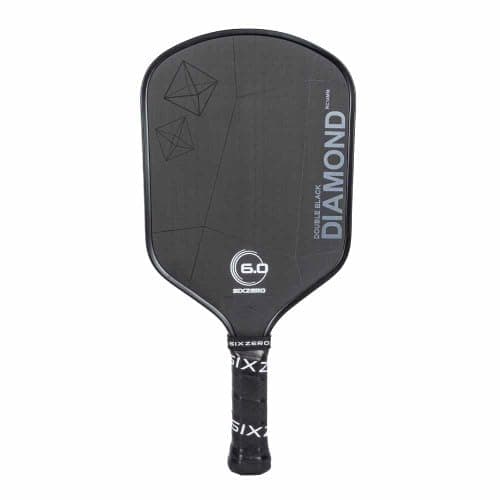 Six Zero Double Black Diamond 16mm All-court value with a huge sweet spot | Best doubles paddle overall | 8.5 | $180.00 · View on Amazon #adPrice as of November 20, 2026 |
| 2 | 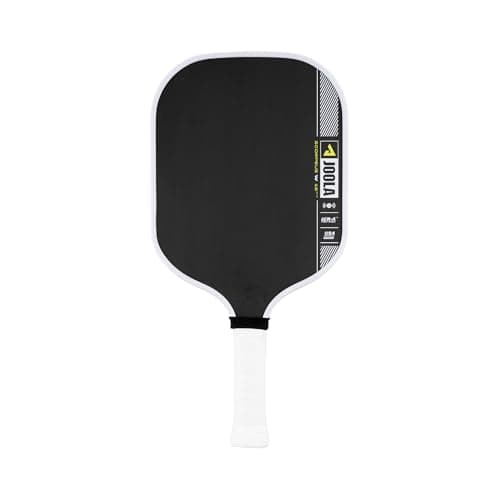 JOOLA Collin Johns Scorpeus Pro IV 16mm Standard-shape all-court control + spin | Best for hands battles | 8.0 | |
| 3 | 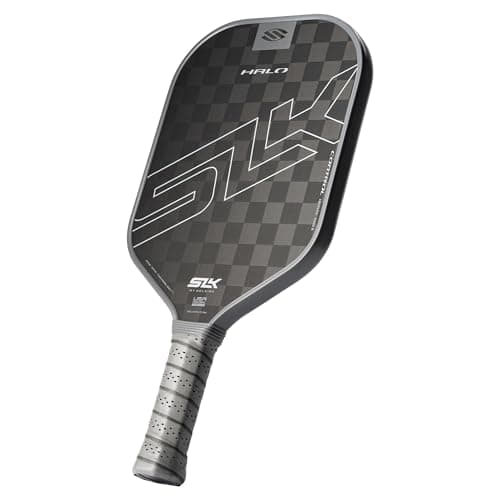 Selkirk SLK Halo Control Max The cheapest real 16mm carbon paddle Selkirk sells | Budget pick: cheapest real 16mm carbon frame here | 7.8 | |
| 4 | 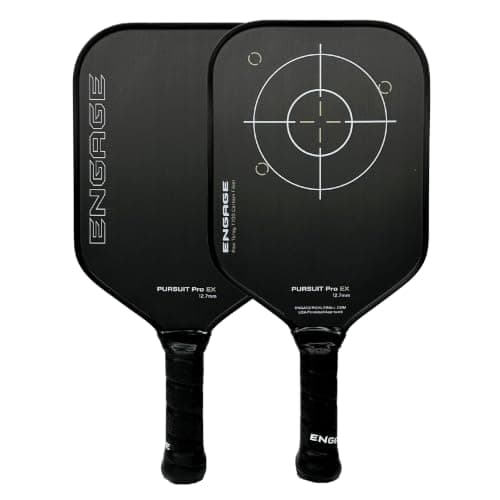 Engage Pursuit Pro EX 15.2 Standard Players who want a short handle and a wide face | Most mishit margin | 8.0 | $129.99 · View on Amazon #adPrice as of November 20, 2026 |
| 5 | 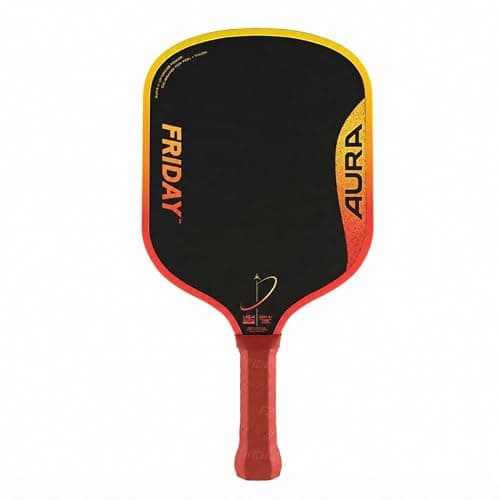 FRIDAY Aura Widebody The most forgiving paddle in FRIDAY's range | Best foam core for doubles | 8.3 |
Tap any row to jump to the full write-up. Prices are pulled live from Amazon.
Six Zero Double Black Diamond 16mm
The internet's default 'do-it-all' recommendation: thermoformed power, a raw-carbon spin face, and a famously forgiving sweet spot at a fair price.
The DBD earned its reputation honestly. The 16mm Control build blends thermoformed pop with one of the most forgiving sweet spots in its class, and the raw T700 face grabs the ball for spin. It's the paddle we point undecided upgraders to first.
Who it is for: the doubles player who wants one paddle that resets, dinks, counters and still finishes a ball. The Double Black Diamond earned its reputation honestly. The 16mm Control build pairs thermoformed pop with one of the most forgiving sweet spots in its class and a raw Toray T700 face that grabs the ball, and on our scoring it is the only paddle on this page to take a 9 on both control and forgiveness. In a hands battle that combination is exactly what you want: the ball that catches the top of the face still comes back over the net. The cons: it is the most expensive paddle here; the hybrid outline is a compromise, so a dedicated widebody gives up less on a wild mishit and a standard shape turns over faster; and it is a thermoformed paddle of the generation most affected by the sport's delamination arguments, so check the current USAP list before a sanctioned event.
- Core
- 16 mm
- Shape
- Hybrid
- Face
- Raw Toray T700 carbon fiber
- Weight
- ~8.0 oz
- Build
- Thermoformed
- Gen
- Control (Gen 2 thermoformed)
Manufacturer-listed as USA Pickleball approved. Approvals and delistings change — verify against the current USAP equipment list before tournament play (checked 2026-07).
JOOLA Collin Johns Scorpeus Pro IV 16mm
The standard-shape Perseus. A more balanced, control-leaning face for players who don't get on with elongated handles — and now the previous generation to JOOLA's Scorpeus Pro V.
Same Gen-4 tech as the Perseus in a standard shape, which brings the sweet spot lower and wider and makes hands battles easier to win. If you want JOOLA's power tech but prefer an all-court, control-first feel, this is the one. JOOLA launched a Scorpeus Pro V in its 2026 Pro V collection at roughly twice the Pro IV's current price; the change is a KineticFrame throat and a raw carbon face rather than a new spec sheet.
Who it is for: the player who keeps losing the fast exchange at the kitchen line and wants a quicker head without dropping to a cheap paddle. The Scorpeus is the standard-shape Perseus - same Gen-4 thermoformed construction and Charged carbon surface, in an outline that brings the sweet spot lower and wider and shortens the swing arc. Short arc means the paddle gets to the ball, and in a four-player scramble that is worth more than reach. Our scoring gives it an even 8 across spin, power, control and forgiveness, which is the most balanced line on this page. The cons: it is the previous generation now that JOOLA has launched a Scorpeus Pro V at roughly twice the price; a standard shape gives up reach, which you will feel on the wide ball down the line; and like every Pro IV it is a stiff frame, which is not the friendliest thing for a sore elbow.
- Core
- 16 mm
- Shape
- Standard
- Face
- Charged carbon-fiber surface
- Weight
- ~8.0 oz
- Build
- Thermoformed
- Gen
- Pro IV (Gen 4)
Manufacturer-listed as USA Pickleball approved. Approvals and delistings change — verify against the current USAP equipment list before tournament play (checked 2026-07).
Selkirk SLK Halo Control Max
Selkirk's value sub-brand doing the sensible thing: a 16mm core and a raw carbon face in a standard outline, at roughly half what the Vanguard line costs.
The spec table is the argument. Selkirk publishes a 16mm core, a raw carbon face, a 16 x 7.85in standard outline, a short 4.85in handle, a 4.25in grip and a 7.9 oz average. That is the same recipe as paddles costing twice as much, minus the thermoformed shell - Selkirk publishes no molding method for the SLK line, so we do not assert one. The short handle is the real trade: it rules the paddle out for a two-handed backhand.
Who it is for: the doubles player who wants a proper 16mm raw-carbon control paddle and refuses to spend flagship money on one. The spec table is the argument. Selkirk publishes a 16mm core, a raw 18k UltraWeave carbon face, a 16 x 7.85in standard outline, a 4.85in handle, a 4.25in grip and a 7.9 oz average - the same recipe as paddles costing twice as much, minus the thermoformed shell. Selkirk publishes no molding method for the SLK line, so we do not assert one. The cons are specific. That 4.85in handle is short, which rules the paddle out for a two-handed backhand and makes it awkward if you choke up on the grip; without a thermoformed shell it gives up pop to everything above it on this page; and at a point down on control against the top picks it is the value answer rather than the touch answer.
- Core
- 16 mm
- Shape
- Standard
- Face
- 18k UltraWeave raw carbon face (per Selkirk's listing)
- Weight
- ~7.9 oz
- Build
- Not published
- Gen
- SLK Halo
Manufacturer-listed as USA Pickleball approved. Approvals and delistings change — verify against the current USAP equipment list before tournament play (checked 2026-07).
Engage Pursuit Pro EX 15.2 Standard
The standard-shape Engage: a 16 x 8in face on a 5in handle, which is the most forgiving geometry the brand publishes.
The Pro EX is Engage's traditional outline — 16in long, 8in wide, with a 5in handle and a 15.2mm Control Pro polymer honeycomb core behind raw T700 carbon. Engage adds Counter Balance and Uniform Guard to lower the balance point. Buy it for hands speed and mishit margin, not for reach.
Who it is for: the doubles player whose actual problem is finding the middle of the face while the ball is coming at them from fourteen feet. The Pro EX is Engage's traditional outline - 16in long, 8in wide, on a 5in handle, with a 15.2mm Control Pro polymer honeycomb core behind a raw T700 carbon face, plus Counter Balance and Uniform Guard to lower the balance point. A full 8in of width is the most face on this page, and a low balance point is what makes a paddle feel quick rather than heavy. It scores a 9 on both control and forgiveness on our scale. The cons: you give up reach entirely, so the stretch volley and the wide dink are harder work; it is not a thermoformed frame, so it is the quietest pick here on raw pace; and Engage's lowered balance point is a preference rather than an upgrade - players who like a head-heavy paddle will find it insubstantial.
- Core
- 15 mm
- Shape
- Standard
- Face
- Raw T700 carbon fiber
- Weight
- ~8.0 oz avg
- Build
- Cold-pressed
- Gen
- Pursuit Pro EX (Control Pro core)
Manufacturer-listed as USA Pickleball approved. Approvals and delistings change — verify against the current USAP equipment list before tournament play (checked 2026-07).
FRIDAY Aura Widebody
Same published core, face, handle and weight as the Aura Hybrid in a full 8in-wide frame - the widest, steadiest shape FRIDAY sells.
Pickleball Central publishes a 16.0 x 8.0in widebody outline, a 16mm EPP foam core, a textured carbon face, a 5.5in handle, a 4.25in grip and a 7.9 oz average in a 7.7-8.1 oz range - every published number identical to the Aura Hybrid except the outline. Width is what buys twist weight and mishit margin, and the retailer's own copy calls this the safer, more forgiving option of the two.
Who it is for: the player who wants a current solid-foam core and the steadiest face in this ranking. Pickleball Central publishes a 16.0 x 8.0in widebody outline, a 16mm EPP foam core, a textured carbon face, a 5.5in handle, a 4.25in grip and a 7.9 oz average in a 7.7-8.1 oz range - every published number identical to the Aura Hybrid except the outline. Width is what buys twist weight, and twist weight is what keeps the face from rotating in your hand on the ball you catch off the end. A solid foam core also holds its feel longer than honeycomb, which matters if you play four times a week. The cons: FRIDAY is a young brand with less of a track record than Selkirk or JOOLA; the 5.5in handle is middling, so a two-handed backhand player should check it before buying; and the approval picture needs care, because the retailer lists it as USAP approved while the Amazon listing makes no approval claim at all.
- Core
- 16 mm
- Shape
- Widebody
- Face
- Textured carbon fiber
- Weight
- 7.7-8.1 oz (7.9 oz avg)
- Build
- Thermoformed
- Gen
- Aura / Gen 4 (EPP foam core)
Pickleball Central lists this paddle's approvals as USAP and its FAQ states it is approved for USAP-sanctioned play; the Amazon listing title makes no approval claim. Approvals and delistings change - verify your exact model against the current USA Pickleball equipment list before tournament play (checked 2026-10).
The published spec table
Five paddles against the specs that decide doubles points. Each paddle's live price and Check price button is in the quick picks table above.
| Spec | Six Zero DBD 16 | Scorpeus Pro IV | SLK Halo Control Max | Pursuit Pro EX | FRIDAY Aura Widebody |
|---|---|---|---|---|---|
| Core | 16mm honeycomb | 16mm, Gen 4 | 16mm | 15.2mm Control Pro honeycomb | 16mm EPP foam |
| Face | Raw Toray T700 | Charged carbon | 18k UltraWeave raw carbon | Raw T700 carbon | Textured carbon |
| Published outline | Hybrid | Standard | 16 x 7.85in | 16 x 8in | 16.0 x 8.0in |
| Handle | Not published | Not published | 4.85in | 5in | 5.5in |
| Listed weight | ~8.0 oz | ~8.0 oz | ~7.9 oz | ~8.0 oz avg | 7.7-8.1 oz |
| Molding method | Thermoformed | Thermoformed | Not published | Cold-pressed | Thermoformed |
| Our control score | 9 / 10 | 8 / 10 | 8 / 10 | 9 / 10 | 8 / 10 |
| Our forgiveness score | 9 / 10 | 8 / 10 | 8 / 10 | 9 / 10 | 9 / 10 |
What doubles actually asks of a paddle
Watch a doubles rally and count the shots. A serve, a return, a third shot, and then — if the third shot was a drop — a sequence of dinks, one speed-up, two or three counters, and a ball that either dies in the kitchen or gets put away. The paddle is involved in that middle sequence far more than in the first three shots, and that middle sequence is where control paddles earn their money.
Reset margin. The hardest skill in doubles is taking pace off a ball that was hit at you from the kitchen line. A thick core with real dwell lets the face absorb that energy rather than returning it, which is the difference between a reset that lands in the non-volley zone and one that floats up to be smashed. Dwell time is the spec behind that feel.
Twist weight. At fourteen feet you do not get to choose where on the face you make contact. Twist weight decides how far the paddle rotates in your hand on an off-center ball, and it is almost entirely a function of width and perimeter mass — which is why two of the picks above are a full 8in wide. Swing weight and twist weight is the guide, and it is the most useful thing to read before spending.
Head speed. A hands battle is a sequence of blocks and counters with no time to take a swing. A shorter, lower-balanced head gets to the ball; a long, head-heavy one does not. That is why the standard-shape Scorpeus is on this page and why the Engage Pro EX advertises a lowered balance point as a feature. If quick hands are specifically your weakness, our control paddles for hand speed page ranks on that one axis.
Width beats reach in doubles
The rulebook caps length plus width at 24 inches, so every paddle on the market is spending a fixed allowance two ways. In singles you spend it on length, because you are covering a whole court alone and reach is survival. In doubles you cover half a court with a partner, and the thing you cannot get back is the ball that catches the edge of your face.
That argues for width, and it is why the two 8in-wide paddles above score a 9 on forgiveness. Our best widebody paddles page takes that argument to its conclusion, and best standard-shape control paddles covers the traditional middle ground. Elongated vs standard vs widebody explains the whole trade in one place.
One exception worth naming: if you hit a two-handed backhand, handle length overrules shape, because a two-handed grip needs the room and a 4.85in handle will not give it to you. The FRIDAY's 5.5in handle is the longest here. Paddle handle length covers how much face a longer handle costs you.
Core thickness: 16mm is the doubles number
Four of the five picks above are 16mm and the fifth is 15.2mm, which is not a coincidence. A thicker core damps impact and lengthens dwell, which is precisely what a reset needs, and it widens the margin on an off-center ball. A 14mm core does the opposite: faster off the face, quicker in the hand, less forgiving. 14mm vs 16mm is the guide, and best 16mm control paddles is the ranking if you want to shop that spec directly.
If you want a doubles paddle that still finishes a ball when the opportunity comes, that is a real category and we rank it separately on control paddles that still hit. And if your partner keeps telling you your dinks sit up, the problem may be the paddle's face rather than its core — our best paddles for dinking page is the one for that.
Picking by level, honestly
At 3.0 to 3.5, buy forgiveness. You will mishit, and a paddle that returns those balls over the net keeps you in rallies long enough to learn. The Engage Pro EX and the FRIDAY Aura Widebody are the two widest faces above.
At 3.5 to 4.0, buy the Double Black Diamond and stop shopping. It is the paddle we point undecided upgraders to first, and the rankings bear that out — it is the only pick here that takes a 9 on both control and forgiveness. Our best control paddles for intermediate players page is the fuller ranking for that band.
At 4.0 and above, the decision stops being about forgiveness and starts being about which exchange you are losing. If it is the fast one, buy the head speed. If it is the reset, buy the dwell. If it is the wide ball, you are probably playing more singles than you think and should read best paddles for singles instead.
The short version
Double Black Diamond 16mm for most doubles players. Scorpeus Pro IV if the fast exchange at the kitchen is what you keep losing. SLK Halo Control Max if the budget decides it and your backhand is one-handed. Pursuit Pro EX if you want the widest face here and a low balance point. FRIDAY Aura Widebody if you want a current solid-foam core and the steadiest face on the page.
Every number above is published by the maker or its retailer, and every price comes from our live layer with its own as-of date. Nothing on this page is a test result, because we do not run tests — how paddles are tested explains who does and what their numbers are worth.
What paddle is best for doubles pickleball?
A 16mm control-leaning paddle with a wide face. Doubles points are decided inside the non-volley zone, where you need dwell to reset a fast ball and twist weight to survive off-center contact - not pace. Of the paddles in our registry the Six Zero Double Black Diamond 16mm is the best all-round answer, because it is the only one scoring a 9 on both control and forgiveness on our scale.
Should a doubles paddle be elongated or widebody?
Widebody or standard, in most cases. The rulebook caps length plus width at 24 inches, so reach is always bought out of width. In doubles you cover half a court with a partner, which makes reach less valuable and makes the off-center ball the thing you cannot afford. An elongated frame is the right choice for singles, where you are covering the whole court alone.
Is 14mm or 16mm better for doubles?
16mm, for most players. The thicker core damps impact and lengthens dwell, which is what a reset and a soft third-shot drop need, and it gives you more margin on a mishit. A 14mm core is faster off the face and quicker in the hand, which suits a player whose doubles game is built on speed-ups and counters rather than on resets.
Do I need a different paddle for doubles and singles?
Not necessarily, but the ideal paddles are different. Singles rewards reach, leverage and a drive that finishes from the baseline, which points at an elongated power frame. Doubles rewards reset margin, twist weight and head speed, which points at a wider control frame. If you play both and only want one paddle, a hybrid outline on a 16mm core is the sensible compromise.
What is the best budget paddle for doubles?
The Selkirk SLK Halo Control Max of the paddles we rank, because its published spec sheet - 16mm core, raw 18k carbon face, 16 x 7.85in standard outline - is the same recipe as paddles costing twice as much. The trade is the 4.85in handle, which is short enough to rule it out if you hit a two-handed backhand, and the absence of a thermoformed shell, which costs it some pop.
Does a heavier paddle help in doubles?
Not usually in the way players expect. Extra static weight adds stability but slows the head, and a hands battle at the kitchen line is won by whoever gets the paddle to the ball. What actually helps is where the weight sits: mass around the perimeter raises twist weight and mishit margin, while mass in the head raises swing weight and slows you down. Our swing weight and twist weight guide covers the difference.
How often should a doubles player replace a paddle?
When the face stops gripping the ball or the core has gone soft, not when a new model launches. Doubles players hit a lot of soft shots and fewer flat drives, so faces tend to wear from grit loss rather than impact damage. Our guide on when a paddle is worn out covers the signs, and our grit durability guide covers how long a raw carbon face realistically holds its texture.