Best Widebody Power Paddles
A full 8in of face is the most forgiving thing you can buy. These are the wide frames that did not trade away the drive to get it.
Disclosure: Drive Dink earns a commission from qualifying Amazon purchases at no extra cost to you. We accept no free products and no paid placements — commissions never change our picks. How this works.
The verdict: buy the FRIDAY Aura Pro Widebody — a full 16.0 x 8.0in frame on a double-thermoformed 16mm foam core, for the player who wants the widest legal face and still wants to hit through the ball. The budget pick is the Selkirk Vanguard Power Air Epic: the cheapest widebody here that genuinely drives, and the most stable frame on this page on a mishit.
Every price shown is read live from Amazon and carries the date it was read. Listings move daily, so confirm before you buy. Units we claim to have tested: 0.
| # | Paddle | Best for | Score | Price |
|---|---|---|---|---|
| 1 | 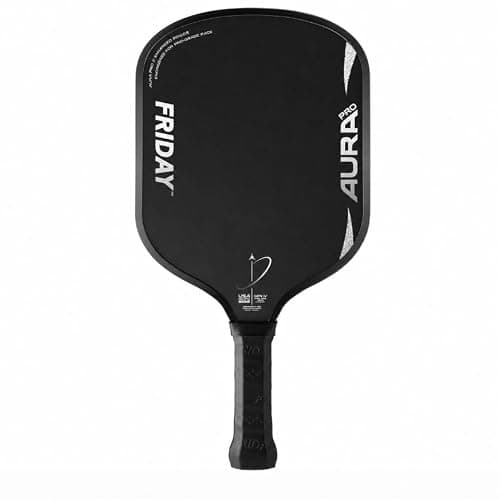 FRIDAY Aura Pro Widebody The firmest, quickest paddle FRIDAY publishes | Best overall widebody power paddle | 8.0 | $169.00 · View on Amazon #adPrice as of November 21, 2026 |
| 2 | 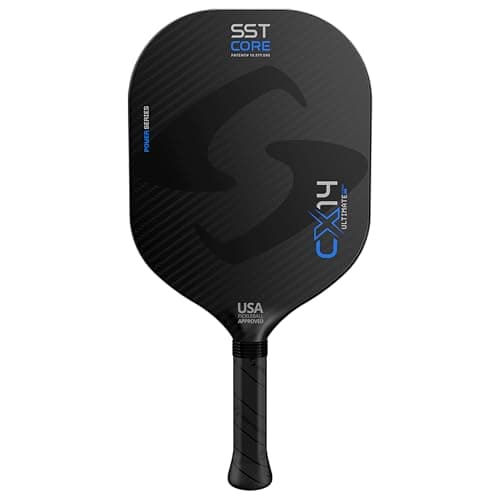 Gearbox CX14H Ultimate Power The heaviest, most unusual build we cover | Best for raw mass | 7.5 | |
| 3 | 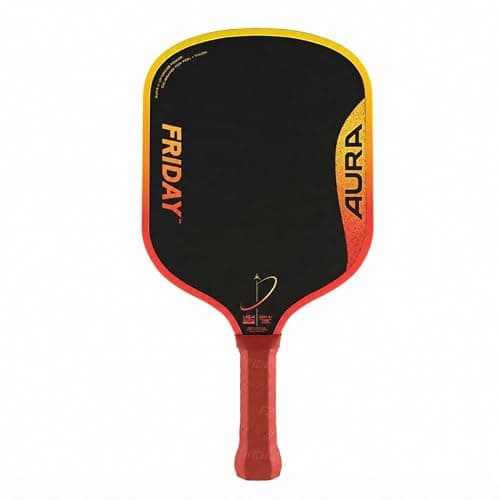 FRIDAY Aura Widebody The most forgiving paddle in FRIDAY's range | Most forgiving | 8.3 | |
| 4 | 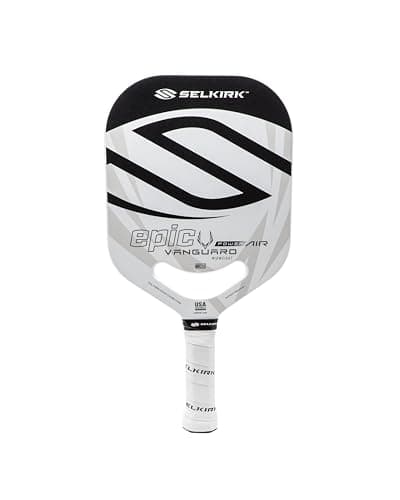 Selkirk Vanguard Power Air Epic Selkirk's widest, most forgiving outline | Budget pick | 7.5 | $99.99 · View on Amazon #adPrice as of November 21, 2026 |
Tap any row to jump to the full write-up. Prices are pulled live from Amazon.
FRIDAY Aura Pro Widebody
The Aura Widebody's published frame with a double-thermoformed structure on top - firmer, louder, more aggressive, and the thinnest stock on this shelf.
Pickleball Central publishes the same 16.0 x 8.0in outline, 16mm EPP foam core, textured carbon face, 5.5in handle, 4.25in grip and 7.9 oz average as the standard Aura Widebody, and describes the Pro as adding a double-thermoformed structure with a firmer, quicker response. Tennis Warehouse's listing for the same paddle names a Quad-Foam Core and FRIDAY's patent-pending ElasTECH internal perimeter weighting instead - the sources do not agree, so we quote both.
For the player who wants maximum mishit margin and refuses to give up pace to get it. Pickleball Central publishes a 16.0 x 8.0in outline, a 16mm EPP foam core, a textured carbon face, a 5.5in handle, a 4.25in grip and a 7.9 oz average in a 7.7-8.1 oz range, and describes the Pro as adding a double-thermoformed structure for a firmer, quicker response. It scores 9 for power and 8 for forgiveness — the only paddle here that manages both. The cons: Tennis Warehouse's listing for the same paddle names a Quad-Foam Core and FRIDAY's ElasTECH perimeter weighting instead, so the sources disagree and we quote both; a firmer frame is also a louder, harsher one; and control stays at 7.
- Core
- 16 mm
- Shape
- Widebody
- Face
- Textured carbon fiber
- Weight
- 7.7-8.1 oz (7.9 oz avg)
- Build
- Thermoformed
- Gen
- Aura Pro / Gen 4 (EPP foam core, double thermoformed)
Pickleball Central lists this paddle's approvals as USAP; Tennis Warehouse's spec list for the same paddle makes no approval claim. Approvals and delistings change - verify your exact model against the current USA Pickleball equipment list before tournament play (checked 2026-10).
Gearbox CX14H Ultimate Power
Not a honeycomb paddle at all: Gearbox builds a solid vertically-ribbed T-700 carbon core, and this is the edgeless, heavyweight version of it.
Gearbox publishes a 15 5/8 x 8in edgeless frame, a 14mm T-700 carbon SST core (solid ribs, not plastic honeycomb), a 3K woven carbon face, a 5 5/8in handle, a 3 5/8in grip and an 8.5 oz average — meaningfully heavier than anything else in our catalog. Gearbox names Power Band and HyperBite 2.0 on it.
For the former tennis or racquetball player who wants weight behind the ball and has the arm for it. This is not a honeycomb paddle at all: Gearbox publishes a 14mm solid T-700 carbon SST core — vertical ribs rather than plastic cells — behind a 3K woven carbon face, in a 15 5/8 x 8in edgeless frame with a 5 5/8in handle, a 3 5/8in grip and an 8.5 oz average. That is meaningfully heavier than anything else in our catalog, and mass is the one power ingredient no construction trick substitutes for. The cons are blunt: 8.5 oz is a lot of paddle to move in a hands battle, the 3 5/8in grip is unusually small, and there is no edge guard to protect the frame.
- Core
- 14 mm
- Shape
- Widebody
- Face
- 3K woven carbon fiber
- Weight
- 8.5 oz avg (8.4-8.6 oz)
- Build
- Cold-pressed
- Gen
- CX / SST (Solid Span Technology)
Manufacturer-listed as USA Pickleball approved. Approvals and delistings change — verify against the current USAP equipment list before tournament play (checked 2026-07).
FRIDAY Aura Widebody
Same published core, face, handle and weight as the Aura Hybrid in a full 8in-wide frame - the widest, steadiest shape FRIDAY sells.
Pickleball Central publishes a 16.0 x 8.0in widebody outline, a 16mm EPP foam core, a textured carbon face, a 5.5in handle, a 4.25in grip and a 7.9 oz average in a 7.7-8.1 oz range - every published number identical to the Aura Hybrid except the outline. Width is what buys twist weight and mishit margin, and the retailer's own copy calls this the safer, more forgiving option of the two.
For the player whose contact is still inconsistent, and who would rather keep the ball in play than add the last few percent of pop. Pickleball Central publishes the same 16.0 x 8.0in outline, 16mm EPP foam core, textured carbon face, 5.5in handle, 4.25in grip and 7.9 oz average as the Pro above it — every published number identical except the molding. The single thermoform makes it softer, and it scores 9 for forgiveness, the top of our scale and a point above the Pro. The con is the trade you just made: power drops from 9 to 8, and the retailer's own copy calls this the safer of the two.
- Core
- 16 mm
- Shape
- Widebody
- Face
- Textured carbon fiber
- Weight
- 7.7-8.1 oz (7.9 oz avg)
- Build
- Thermoformed
- Gen
- Aura / Gen 4 (EPP foam core)
Pickleball Central lists this paddle's approvals as USAP and its FAQ states it is approved for USAP-sanctioned play; the Amazon listing title makes no approval claim. Approvals and delistings change - verify your exact model against the current USA Pickleball equipment list before tournament play (checked 2026-10).
Selkirk Vanguard Power Air Epic
The widebody Power Air: 15.75 x 8in with an edgeless frame, which buys the biggest margin on an off-center ball of any Selkirk we cover.
Selkirk publishes a 0.5in (about 13mm) polymer honeycomb core behind a hybrid fiberglass-and-carbon face, in a 15.75 x 8in outline with a 5.25in handle, a 4.25in grip and a 7.7-8.1 oz range. The edgeless DuraEdge construction removes the plastic bumper, so face area runs right to the rim. Two things follow from the numbers: the wide, short outline is the easiest Selkirk to turn over at the kitchen and the most stable on a mishit, and the thin core makes it the poppiest - at the cost of touch.
The cheapest widebody on this page that still genuinely drives, and the one to buy if you want the shape without flagship money. Selkirk publishes a roughly 13mm polymer honeycomb core behind a hybrid fiberglass-and-carbon face in a 15.75 x 8in edgeless DuraEdge outline, with a 5.25in handle, a 4.25in grip and a 7.7-8.1 oz range. Two things follow from those numbers: it is the most stable paddle here on an off-center ball (9 for forgiveness) and the poppiest off the face, because a thin core returns energy fast. The cons: that thin core gives up touch — our control score is a 6, the lowest in our catalog — the face is part fiberglass rather than raw carbon, so spin drops to a 7, and the 5.25in handle is short for two hands.
- Core
- 13 mm
- Shape
- Widebody
- Face
- Hybrid fiberglass and carbon-fiber face, Edgeless DuraEdge
- Weight
- 7.7-8.1 oz
- Build
- Cold-pressed
- Gen
- Vanguard Power Air
Manufacturer-listed as USA Pickleball approved. Approvals and delistings change — verify against the current USAP equipment list before tournament play (checked 2026-07).
Why width is the most underrated spec in pickleball
USA Pickleball caps paddle length plus width at 24in, so every outline is a zero-sum trade. Spend the budget on length and you buy reach and leverage; spend it on width and you buy twist weight — the head's resistance to rotating when the ball lands away from the middle of the face.
Twist weight is the spec that decides what happens on the shots you did not hit well, which on a real court is most of them. When a narrow elongated frame takes a ball an inch off center, the head twists in your hand, the face angle changes during contact, and the ball leaves slower and in a direction you did not choose. A wider frame resists that rotation, so the mishit stays closer to the shot you meant to play. That is the whole argument for a widebody, and our swing weight and twist weight guide works through the physics.
The reason width has a reputation as a beginner spec is historical. Wide frames used to be short, thin-cored and cheap, so they were forgiving and gutless at the same time. Modern construction broke that link: thermoformed shells and solid foam cores supply pace that the shape no longer has to, which is why three of the four paddles here are wide frames that still score 8 or 9 for power.
How we picked
We took every paddle in our catalog whose maker or retailer publishes a widebody or square outline, required a live Amazon offer at the last price refresh, and then kept only the frames that score 8 or higher for power — this is the power lane, not the touch lane. Ranking is on published construction first, then on what each frame gives up. Every dimension and weight here is manufacturer- or retailer-published and cited below.
The exclusions are worth stating, because two of them are cheaper than anything on this list. The Holbrook Aero S Edgeless 16mm is the cheapest widebody we cover and a genuinely good paddle, but at a 7 for power it is a touch frame in a wide outline — it leads our foam core control page instead. The second Gearbox CX14H, the 8.0 oz version, scores a 7 for power for the same reason. And the 11Six24 Pegasus Power 2 and Vatic Pro V-Sol Pro Bloom both qualify on specification but carried no buyable Amazon offer at the last price refresh, so we will not rank a paddle you cannot currently buy — they sit on our widebody control page, which ranks the same shape for stability rather than drive.
What a widebody costs you
Reach. Every inch of width is an inch of length you did not buy. At the stretch volley and on a wide dig, an elongated frame gets to balls these do not. Our elongated paddles page is the other side of that trade.
Leverage on a drive. A longer paddle multiplies hand speed at the tip. A wide frame has to find pace from construction and mass instead, which is exactly what the Gearbox does with 8.5 oz and the FRIDAYs do with a double-thermoformed foam core.
Handle length, usually. Short, wide frames tend to come with short handles, and a two-handed backhand needs roughly 5.5in. Both FRIDAYs publish 5.5in and the Gearbox publishes 5 5/8in, so this page is unusually friendly to two-handers — but the Selkirk's 5.25in is tight. Our handle length guide covers the measurement.
Who should buy which
If you want the best paddle here full stop, the Aura Pro Widebody. It is the only frame on the page that scores 9 for power and 8 for forgiveness at once.
If you came from tennis or racquetball, the Gearbox CX14H Ultimate Power — 8.5 oz and a solid carbon core is the closest thing in pickleball to the mass you are used to. Our paddles for former tennis players page covers the transition more broadly, and our Gearbox review explains how the brand's construction differs from everyone else's.
If you mishit a lot, the standard Aura Widebody. Same published frame as the Pro, softer molding, a point more forgiveness.
If the budget is the constraint, the Power Air Epic — but go in knowing the thin core is poppy rather than precise. If your soft game is the weak part of your game, buy from our most forgiving paddles page instead.
The bottom line
Width is the cheapest insurance in pickleball, and it no longer costs you the drive. Take the Aura Pro if you want the whole package, the Gearbox if you want mass, the standard Aura if you want margin, and the Selkirk if you want the shape for the least money. Then read our main power roundup for the frames that spent the length budget the other way, and our hybrid shape page if you want to split the difference.
What counts as a widebody pickleball paddle?
A frame around 8in wide, which under the 24in length-plus-width cap means a shorter paddle — typically 15.7in to 16.0in long. On this page that runs from Gearbox's 15 5/8 x 8in to FRIDAY's 16.0 x 8.0in. There is no standards body for shape names, so read the published dimensions rather than the word on the listing.
Are widebody paddles only for beginners?
Not any more. The reputation comes from an older generation of wide frames that were short, thin-cored and cheap, so they were forgiving and powerless together. Thermoformed shells and solid foam cores now supply the pace the shape used to have to, which is why three of the four paddles here score 8 or 9 for power.
What is twist weight and why does width change it?
Twist weight is the head's resistance to rotating around its long axis when the ball lands off center. Mass further from that axis resists rotation more, so a wider face has more of it. High twist weight means an off-center hit leaves the paddle closer to the shot you intended.
Can I use a widebody with a two-handed backhand?
On this page, mostly yes. Both FRIDAY frames publish 5.5in handles and the Gearbox publishes 5 5/8in, all workable for two hands. The Selkirk Power Air Epic publishes 5.25in, which is short for a bottom hand.
Do the prices in the table stay the same?
No. Each price is read live from Amazon and shown with the date it was read, and listings change daily. Treat the number as a reading at a point in time and check the listing before you buy.