Best Pickleball Nets Under $200
A net is the one piece of pickleball gear where the cheap version fails in a way you notice every single game: it sags.
Disclosure: Drive Dink earns a commission from qualifying Amazon purchases at no extra cost to you. We accept no free products and no paid placements — commissions never change our picks. How this works.
The verdict: buy the A11N Sports Pro — the only net under $200 here with a hand winch, for anyone putting up a net they will actually play on week after week. The budget pick is the Fostoy Portable 2-in-1: it builds either a 22-foot regulation net or an 11-foot half-court net from one set of poles, which is the right answer for a driveway.
All three were listed under $200 at the last price check. Prices in the table are read live from Amazon and carry the date they were read, so confirm on the listing before you buy. Units we claim to have tested: 0.
| # | Paddle | Best for | Score | Price |
|---|---|---|---|---|
| 1 | 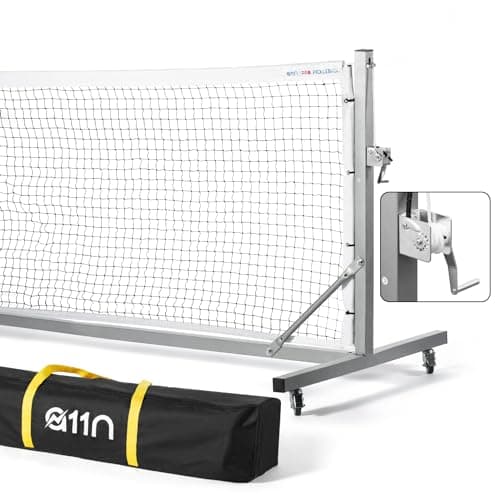 A11N Sports Pro Pickleball Net (wheels + hand winch) Best tension system for a home court | Best overall under $200 | — | |
| 2 | 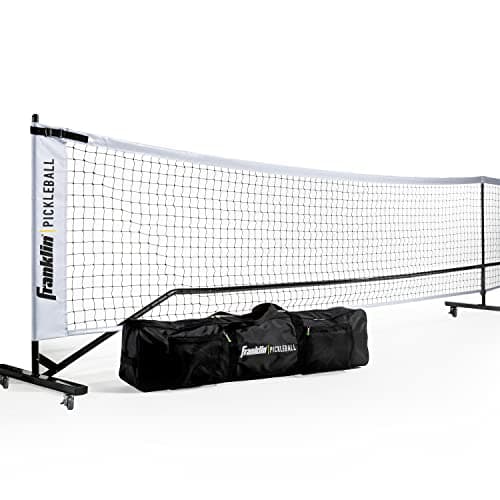 Franklin Sports Pickleball Net System with Wheels Best established-brand net for moving daily | Best established-brand pick | — | |
| 3 | 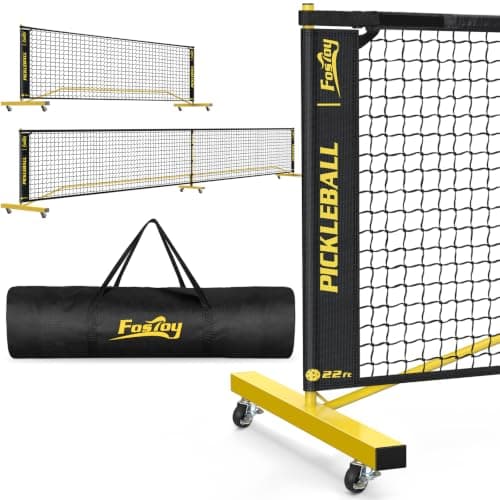 Fostoy Portable Pickleball Net Set with Wheels (22 ft / 11 ft) Cheapest net worth buying, for driveway play | Budget pick | — |
Tap any row to jump to the full write-up. Prices are pulled live from Amazon.
A11N Sports Pro Pickleball Net (wheels + hand winch)
A hand winch you can re-tension in seconds, six locking casters and sand-bag ballast — the answer to a net that sags by the third game.
A11N publishes tournament-regulation dimensions, a thick powder-coated metal frame with wide bent legs for wind stability, six lockable caster wheels that roll on gym floors as well as outdoor courts, and a hand winch for adjusting net tension. Two empty bags are included so you can load sand for ballast. The warranty is split: 12 months on the posts, 6 months on the net itself.
For anyone setting up a net they will play on repeatedly — a driveway court, a gym, a cul-de-sac league. A11N publishes tournament-regulation dimensions (22 ft, 36in at the sidelines, 34in at the center), a thick powder-coated metal frame with wide bent legs for wind stability, six lockable caster wheels that roll on a gym floor as well as a court, and a hand winch for adjusting net tension. The winch is the whole reason this is first: it is the only tension system on this page you can re-tighten in seconds without taking anything apart. Two empty bags are included for sand ballast. The cons: the warranty is split and short — 12 months on the posts but only 6 on the net itself — and a metal frame with six casters is not a net you carry far.
- Spec 1
- 22 ft, 36 in sidelines / 34 in center
- Spec 2
- Hand-winch tension system
- Spec 3
- 6 lockable caster wheels, sand-bag ballast
- Spec 4
- 12-mo post / 6-mo net warranty
Franklin Sports Pickleball Net System with Wheels
Steel frame, tool-free bungee assembly and lockable casters from the brand that supplies the sport's most-played ball — the safe default.
Franklin's 22-foot regulation system uses a crossbar with an internal bungee cord so the sections snap together without tools, and it rides on lockable casters you can free to roll the whole net off court between sessions. The carrying bag holds the complete system plus a dozen balls. Franklin does not publish a weight figure for it; retailers list it at roughly 29 lb with the bag, which makes it the heaviest of the portable options here.
For the buyer who wants a known name and a net they move off court between sessions. Franklin's 22-foot regulation system uses a crossbar with an internal bungee cord, so the sections snap together without tools, and it rides on lockable casters you can free to roll the whole thing away. The carrying bag holds the complete system plus a dozen balls, which is a genuinely useful detail if the net lives in a garage. Franklin is also the company that makes the X-40, the ball used at most sanctioned US tournaments, so the spec sheets it publishes tend to be honest. The cons: Franklin does not publish a weight figure, and retailers list it at roughly 29 lb with the bag, which makes it the heaviest option here — and there is no winch, so re-tensioning means working the bungee crossbar.
- Spec 1
- 22 ft, 36 in sidelines / 34 in center
- Spec 2
- Steel frame, internal-bungee crossbar
- Spec 3
- Lockable casters, tool-free setup
- Spec 4
- Bag stores the system + 12 balls
Fostoy Portable Pickleball Net Set with Wheels (22 ft / 11 ft)
One set of poles that builds either a 22-foot regulation net or an 11-foot half-court net — the sensible way into the category at driveway money.
The 2-in-1 configuration is the reason to buy this one: the same poles assemble as a full 22-foot net or an 11-foot half-court net, which is what most driveways and garages can actually fit. It rolls on locking wheels and packs into a carry bag. Fostoy publishes no frame gauge, system weight or warranty term for this configuration, so treat it as a recreational net and expect to re-tension the top cord more often than on the winch-equipped systems.
The cheapest net on this page we would still buy, and the right one if the court you are playing on is a driveway. The 2-in-1 configuration is the reason: the same set of poles assembles either as a full 22-foot regulation net or an 11-foot half-court net, and a half-court net is what most driveways and garages can actually fit. It rolls on locking wheels and packs into a carry bag. The cons are the ones you expect at this price and we will not soften them: Fostoy publishes no frame gauge, no system weight and no warranty term for this configuration, there is only one set of poles so you build one size at a time, and you should expect to re-tension the top cord more often than on the winch-equipped A11N.
- Spec 1
- 22 ft regulation or 11 ft half-court
- Spec 2
- Locking wheels, carry bag
- Spec 3
- One set of poles - build one size at a time
- Spec 4
- No published frame gauge, weight or warranty
The failure mode is always tension
Nets do not usually break. They sag. The top cord stretches a little, the posts lean in a little, and by the third game the center is two inches below regulation and every dink you practise is being practised against the wrong height. You stop noticing it, which is worse than noticing it, because you are grooving a stroke for a net that does not exist on a real court. Our net height guide covers why the 36in-sideline, 34in-center profile matters and how to check yours.
So the specification worth paying for in this bracket is not the frame material or the bag. It is the tension hardware. A winch lets you re-tighten the top cord in seconds, at any point, without disassembling anything — which is why the A11N leads this page despite being the cheapest of the two full systems. A bungee crossbar, like Franklin's, holds tension well from a cold start and is quicker to put up, but it gives you no adjustment once it is standing. A plain tie-off cord, which is what you get at the bottom of the market, is the one that sags.
How we picked
We took every net in our catalog that carried a live Amazon price under $200 at the last refresh, required published regulation dimensions, and ranked on tension hardware first, then frame and mobility, then on what the maker is willing to publish. Where a brand does not publish a weight, a gauge or a warranty term, we say so rather than fill the gap — missing specification is itself information at this end of the market.
Two nets in our catalog sit outside this band and are worth naming so you know what the extra money buys. The JOOLA Symmetry is a five-piece shock-corded portable net with a tension lock and a published weight under 28 lb, designed to be carried to a court in a bag rather than rolled — a different product, and above $200 at the last check. The Dominator In-Ground system is a permanent installation with round posts and costs several times this bracket. Both are ranked on our main pickleball nets page.
Rolling, carrying, or neither
The three nets here all have wheels, which sounds like a convenience feature and is actually the main thing separating use cases.
A net on casters is for a surface it lives on — a driveway, a gym floor, a home court. You roll it aside, you do not lift it. Both the A11N and the Franklin are this, and the Franklin's roughly 29 lb is fine on wheels and awkward in a car.
A net you carry wants to be light and to pack small, which usually means shock-corded poles and no casters. That is the JOOLA Symmetry's design, and it is why it costs more.
A half-court net is the option almost nobody considers and plenty of people should. If your driveway is twenty feet wide, a 22-foot regulation net does not fit, and an 11-foot net lets you drill dinks, resets and third-shot drops — most of what actually improves — in the space you have. That flexibility is the Fostoy's real argument. Our ball machine vs practice wall guide covers the rest of the solo-practice picture.
What under $200 does not buy
A long warranty. The best coverage in this bracket is A11N's 12 months on the posts and 6 on the net. Treat the netting itself as a consumable — UV and weather are what kill it, not play.
Wind stability without ballast. Wide bent legs help, but anything in this price range will move in real wind unless you weight it. The A11N includes two empty bags for sand, which is the right approach: buy the sand locally rather than pay to ship weight.
A published frame gauge. Only the metal-frame systems describe their construction in any detail, and the cheapest option here publishes nothing about it at all.
Balls. Two of the three include none. If you are outfitting a court from scratch, budget for a sleeve — our pickleball balls page and our indoor vs outdoor balls guide cover which to get.
The bottom line
Take the A11N if you want the net that stays at regulation height without you thinking about it, the Franklin if you want a known brand and tool-free setup, and the Fostoy if your court is a driveway and the half-court option is worth more to you than a winch. Then read our full pickleball nets roundup for the carry-to-court and in-ground options above this band, and our what gear do you actually need page if you are building a home setup from nothing.
What should I look for in a pickleball net under $200?
Tension hardware, before anything else. Nets fail by sagging, not by breaking, and a hand winch lets you re-tighten the top cord in seconds at any point. A bungee crossbar sets up faster but offers no adjustment once standing, and a plain tie-off cord is what sags.
Are nets under $200 regulation size?
All three on this page publish tournament-regulation dimensions: 22 feet wide, 36 inches high at the sidelines and 34 inches at the center. The Fostoy also builds as an 11-foot half-court net, which is not regulation but is often the only size that fits a driveway.
Do I need a net with wheels?
Only if the net lives on the surface you play on. Casters are for rolling a net aside on a driveway, gym floor or home court. If you carry your net to a public court in a car, a lighter shock-corded design without wheels packs better — that is a different product and generally costs more.
How long will a net in this price range last?
The frame outlives the netting. The best warranty here is 12 months on the posts and 6 months on the net, and UV exposure and weather are what degrade the netting rather than play. Storing it out of the sun between sessions is the single biggest thing you can do for it.
Do these prices stay under $200?
Not guaranteed. Every price is read live from Amazon and shown with the date it was read, and listings move. Check the live price on the listing before you buy.