How to Break In a Pickleball Paddle
A paddle does not break in the way shoes do. Most of what changes in the first three sessions is you. Here is what genuinely shifts, what does not, how long to give it, and what not to do to a paddle that is not yet a week old.
Disclosure: Drive Dink earns a commission from qualifying Amazon purchases at no extra cost to you. We accept no free products and no paid placements — commissions never change our picks. How this works.
"How do I break in my new paddle?" is one of the most-asked questions in the sport, and the honest answer is that you mostly do not. Modern paddles are stiff carbon faces bonded to polymer cores or molded into unibody shells, and unlike a leather shoe or a baseball glove there is very little in that construction that softens, shapes or settles with use. What changes in the first three or four sessions is almost entirely you: your reset height, your dink depth, how hard you swing on a paddle that returns more or less energy than the last one. This guide separates the small amount that genuinely shifts in the paddle from the large amount that shifts in the player — and then names the three cheap things that actually shorten the adjustment.
What actually changes in the first sessions
The grip settles. This is the one true break-in. Stock grips are firm and slick from the factory and take a few hours of hand pressure and sweat to stop feeling foreign. It is also the easiest part to skip, which is why the first product below is an overgrip. Our grip size guide covers whether the stock handle fits before you wrap it.
A raw carbon face does not improve — it is at its best on day one.This is the part most people get backwards. An exposed carbon weave grips the ball because of a physical micro-texture, and that texture is a consumable: every spin shot polishes the peaks down slightly. A new raw face is as grippy as it will ever be. Some players report a raw face "coming alive" after a session or two; what they are usually feeling is their own recalibration, not the face improving. Our grit durability guide covers the wear curve.
The core does not soften in any useful sense. A honeycomb core compresses thousands of times a session and does, over months, gradually lose some of its spring — that is wear, not break-in, and our worn-out paddle guide covers the endpoint. A thermoformed shell does not loosen up either. If a paddle feels harsh in session one, it will feel harsh in session ten; the fix is tape or a different core thickness, not patience.
You recalibrate. This is the large part. Moving between core thicknesses changes dwell time enough that familiar resets and dinks land differently for a week; moving between shapes changes where the sweet spot sits; moving from cold-pressed to thermoformed changes how much energy comes back on a block. Almost everyone overhits early. Give any new paddle three or four sessions before you form an opinion, and drill before you play if you can.
So the honest break-in plan is: fix the grip on day one, remove the variables you can, play three or four sessions before judging, and only then tune. The three things below map to those steps. Live Amazon prices are on each card.
GAMMA Supreme Overgrip (3-Pack)
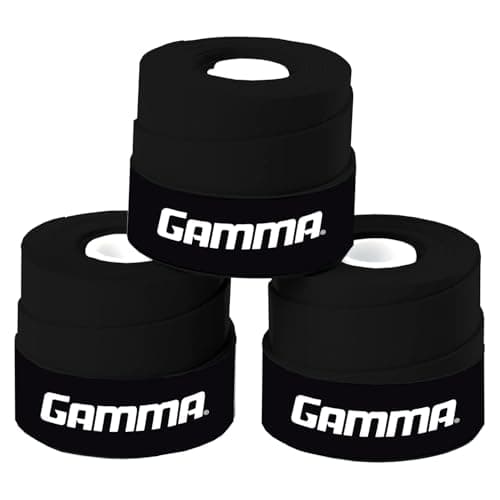
The racquet-sport default. Cheap, thin, tacky, and available everywhere — the sensible first thing to try.
GAMMA Supreme has been a staple in tennis and racquetball bags for years and translates straight across to pickleball. It is thin, mildly tacky and inexpensive enough that you can rewrap whenever it stops feeling fresh, which is the honest way to use an overgrip.
The one part of a new paddle that genuinely needs breaking in is the handle, and the fastest way to skip it is to wrap it. Stock grips are often firm, slick and sized for nobody in particular, and the first two sessions of a new paddle are frequently the grip settling rather than the paddle. A thin, tacky overgrip like GAMMA's racquet-sport staple gets the handle feeling familiar on day one, adds a fraction to the grip size if the stock handle runs small, and costs almost nothing to rewrap when it stops feeling fresh. Our grip size guide covers how to tell whether the stock handle fits before you build it up.
- Spec 1
- Tacky feel
- Spec 2
- Thin — minimal handle build-up
- Spec 3
- 3-pack
The Racket Pro Weighted Tungsten Tape (1g/inch)
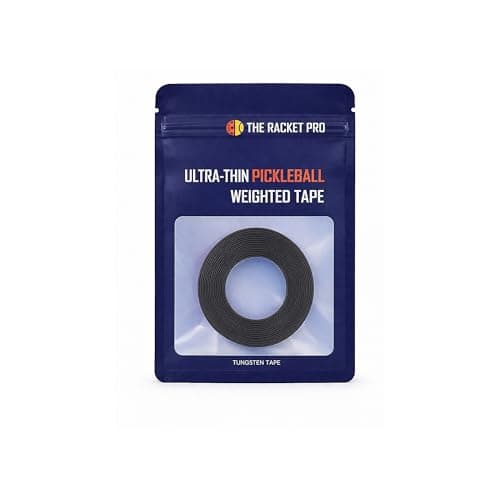
Tungsten instead of lead, sold by the roll at a full gram per inch — the option when you want real mass without handling lead.
Tungsten tape does the same job as lead tape without the material most people would rather not stick to something they hold. At a gram per inch this is the denser of the tungsten options we found, which matters if you are adding meaningful weight to the head rather than fine-tuning a few grams.
Do not touch this in the first three sessions — you are still recalibrating, and tape on a paddle you have not yet learned tells you nothing. After that, if the new paddle feels light, twists on off-center contact or swings differently from what you are used to, a few grams of tape is how you move it toward the paddle you had. Tungsten at a gram per inch adds meaningful mass in a short strip without handling lead. Our lead tape guide covers placement — sides for stability, tip for plow-through, handle to bring the balance back — and how much to add at a time.
- Spec 1
- Tungsten — lead-free
- Spec 2
- 1 gram per inch
- Spec 3
- Sold as a roll, cut to length
Franklin X-40 Outdoor Pickleballs
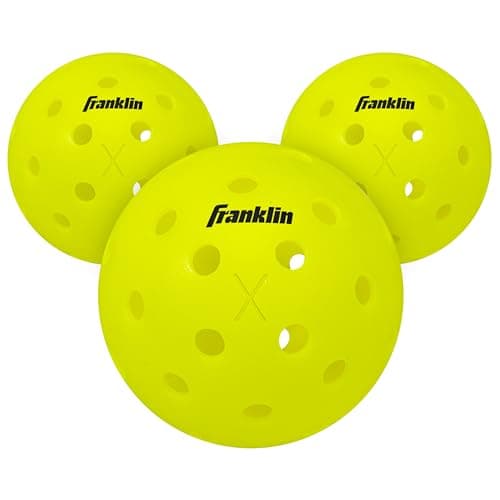
The most-played outdoor ball in the sport — the USA Pickleball national championship ball and a durable, true-flying default.
If you play outdoors, the Franklin X-40 is the ball you'll see most and the one most tournaments use. Consistent flight, a hard outdoor shell, and the official-ball pedigree make it the easy default for outdoor play.
Break a paddle in with the ball you will actually play with, because feel is a paddle-and-ball system, not a paddle. If your games are outdoors, that is almost certainly the Franklin X-40 — the USA Pickleball national championship ball and the outdoor default — and a fresh sleeve for the first sessions removes one variable from a period that already has too many. A hard outdoor ball also shows a raw carbon face's grip at its most honest; a soft indoor ball on a new paddle flatters everything.
- Spec 1
- 40-hole outdoor design
- Spec 2
- USA Pickleball approved
- Spec 3
- Tournament standard
How long to give a new paddle
Three to four sessions of real play, or two focused drilling sessions plus two games. That is long enough for your hands to relearn reset height and dink depth and for the grip to settle, and short enough that a raw face is still fresh when you make the call. If after four sessions the paddle still feels wrong in a way you can name — too harsh, too slow off the face, twisting on the sides — that is information about the paddle, not a sign it needs longer. Our 14mm vs 16mm guide and paddle shape guide will usually tell you which specification is producing the feeling.
A four-session plan
Session one — drill, do not play. Wrap the grip first. Then spend the session on the shots where dwell time shows up most: dinks, resets from the transition zone and third-shot drops. Do not hit a drive until the soft game feels familiar. Use the ball you play with — see the third pick above.
Session two — add pace.Drives, speed-ups and counters. This is where a thermoformed paddle's extra energy return surprises people; expect to hit long early and shorten the swing rather than the target. Note which contacts twist the frame.
Sessions three and four — play. Real games, with the recalibration mostly done. Pay attention to the sides of the face: if off-center contact is turning the paddle, that is the twist-weight complaint that tape fixes, and now is the time to try it. Our lead tape guide covers placement and quantity. Add a little, play a session, then decide; changing several things at once tells you nothing.
Mistakes that ruin a new paddle early
Sanding, scuffing or "roughing up" the face. A persistent myth holds that a new face should be abraded to bring out the grit. It should not. Deliberately altering the hitting surface is a violation of USA Pickleball equipment rules and makes the paddle non-compliant in sanctioned play, and on a raw carbon face it simply removes texture you paid for. Our USAP approval guide covers the rule.
Leaving it in a hot car. Heat is bad for the whole construction — adhesives, foam and core — and a paddle that lives in a trunk through a summer ages faster than one that lives indoors. This is the single easiest way to shorten the life of a new paddle.
Scraping the court. Digging the edge or the face into the surface on a low ball does concentrated damage in seconds. New paddles get this treatment most because the owner has not yet learned where the frame ends.
Judging it in session one.Almost everyone overhits a new paddle in the first hour and concludes it is "too powerful" or "too harsh." Sometimes it is. Usually it is a swing calibrated to the old paddle. Four sessions.
Skipping the inspection. Before the first session, run the two-minute check in our delamination guide: tap across the face for a dull area, sight along it for ripples, and check that the face sits flush at the edge. Build variance shows up most at the value tier, and a paddle that arrives with a defect is a return, not a break-in problem.
Clean it from day one
The habit that most extends a raw carbon face is not a break-in ritual; it is wiping the face down after every session. Ball residue, court dust and skin oil fill the valleys of the weave, and a face that feels smooth after a month is often just dirty. Our paddle cleaning guide covers the method and what not to use. Start on session one and the grit lasts noticeably longer.
When it really is the paddle
If four sessions in the paddle still twists on the sides, tape at 3 and 9 o'clock is the fix. If it is still harsh on the arm, the core is too thin or the frame too stiff for you, and our most forgiving paddles page is the read. If it is still slow off the face, no amount of play changes that — see our best power paddles. And if the grip is still the problem after wrapping it, the handle is probably the wrong size or shape rather than the wrong grip; our handle length guide and grip picks cover the options.
The bottom line
Wrap the grip on day one, inspect the paddle before you hit with it, drill the soft game before you drive, use the ball you play with, give it four sessions, and only then tune with tape. Do not sand it, do not cook it in the car, and do not decide in the first hour. The paddle will not change much. You will.
How long does it take to break in a pickleball paddle?
Three to four sessions, and most of that is you adjusting rather than the paddle changing. Modern carbon-faced paddles do not soften or settle the way shoes or gloves do; the grip is the only part that genuinely breaks in. Give a new paddle four sessions before judging it, and treat any complaint that survives that as information about the paddle.
Does a new pickleball paddle get better with use?
Not in any measurable way. A raw carbon face is at its grippiest on day one and wears smoother with play; the core loses spring over months rather than gaining it. What improves is your calibration to the paddle's dwell time, sweet spot and energy return. Any sense of the paddle 'coming alive' after a session or two is usually that.
Should I sand or scuff a new pickleball paddle to add grit?
No. Deliberately altering the hitting surface makes the paddle non-compliant under USA Pickleball equipment rules, and on a raw carbon face it removes the texture you paid for rather than adding any. Clean the face instead — residue filling the weave is the usual reason a face feels smoother than it should.
Why does my new paddle feel harsh?
Either you are overhitting a paddle that returns more energy than your old one, which four sessions fixes, or the core is thinner or the frame stiffer than suits you, which they do not. If it still stings on off-center contact after four sessions, tape at 3 and 9 o'clock raises twist weight; if it stings everywhere, you probably want a thicker core.
Should I put lead tape on a new paddle straight away?
No. Play three or four sessions first so you are tuning the paddle rather than your own recalibration. Then, if it feels light, twists on the sides or swings differently from what you are used to, add a few grams at a time — sides for stability, tip for plow-through, handle to bring the balance back — and play a session between changes.