Best Gen 4 Pickleball Paddles
Nobody owns the phrase "Gen 4" and no standards body defines it. Here is what the brands using it actually build, and which of those paddles is worth your money.
Disclosure: Drive Dink earns a commission from qualifying Amazon purchases at no extra cost to you. We accept no free products and no paid placements — commissions never change our picks. How this works.
The verdict: buy the JOOLA Perseus Pro IV 16mm — the Gen-4 frame that set the benchmark, now priced as the previous generation, for almost anyone shopping this label. The budget pick is the JOOLA Scorpeus Pro IV 16mm: the cheapest Gen-4 paddle on this page and the only one with no weak axis on its card.
Prices are read live from Amazon and carry the date they were read, never typed into this copy. They move daily, so check the listing before you buy. Units we claim to have tested: 0.
| # | Paddle | Best for | Score | Price |
|---|---|---|---|---|
| 1 | 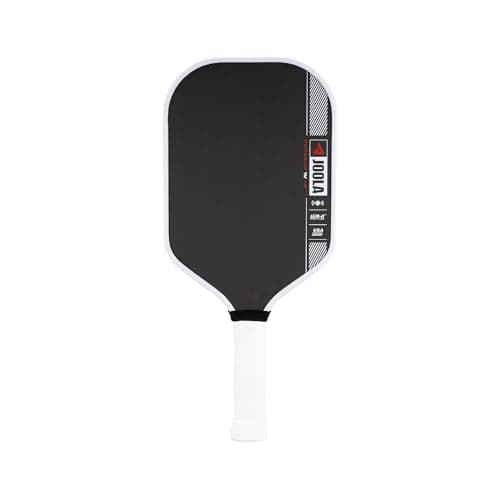 JOOLA Ben Johns Perseus Pro IV 16mm All-court power with a big sweet spot | Best overall Gen 4 paddle | 8.3 | |
| 2 | 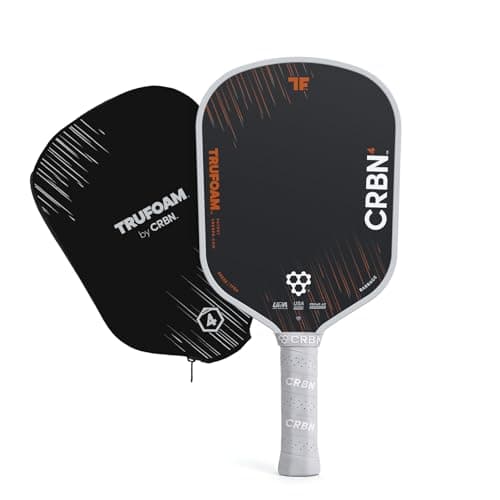 CRBN TruFoam Barrage Newest-gen foam power + stability | Best full-foam build | 8.3 | |
| 3 | 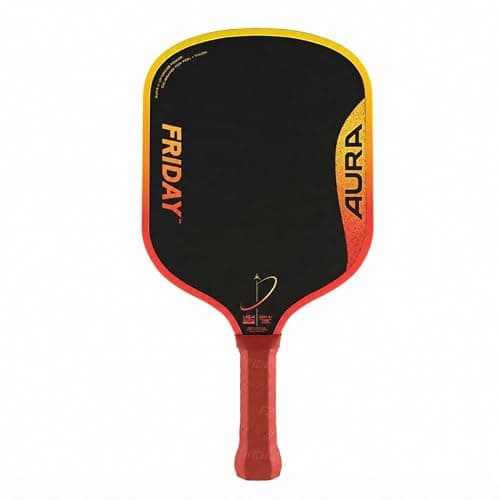 FRIDAY Aura Widebody The most forgiving paddle in FRIDAY's range | Most forgiving Gen 4 | 8.3 | |
| 4 | 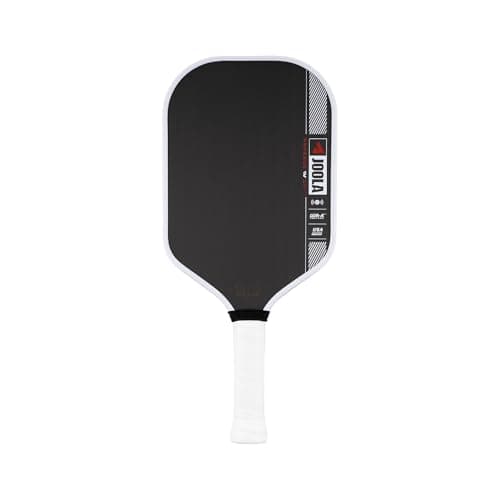 JOOLA Ben Johns Perseus Pro IV 14mm Fast hands + spin at the net | Best for pure pop | 7.8 | |
| 5 | 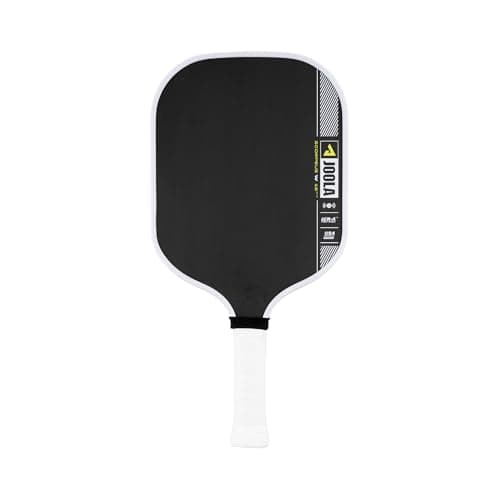 JOOLA Collin Johns Scorpeus Pro IV 16mm Standard-shape all-court control + spin | Budget pick | 8.0 |
Tap any row to jump to the full write-up. Prices are pulled live from Amazon.
JOOLA Ben Johns Perseus Pro IV 16mm
JOOLA's Gen-4 Perseus: thermoformed power and a grippy Charged surface, with the 16mm core adding forgiveness the 14mm gives up. Now the previous generation to the Pro V.
The Perseus Pro IV set the benchmark the rest of the power field chased, and JOOLA's March 2026 Pro V refines that formula rather than replacing it. The 16mm version trades a little raw pop for a larger, more forgiving sweet spot — the sensible pick if you want top-tier power without punishing off-center hits. Charged Surface Technology keeps spin high.
Who it is for: almost anyone shopping this label. The Perseus Pro IV is the paddle that set the benchmark the rest of the power field chased, and the 16mm version is the forgiving cut: a thermoformed hybrid frame, a 16mm Propulsion polypropylene honeycomb core, a Hyper-Foam Edge Wall, the Tech Flex Power throat foam and JOOLA's grippy Charged carbon surface, at roughly 8.0 oz. It scores 9 for spin, 9 for power and 8 for forgiveness — and because JOOLA's March 2026 Pro V collection superseded it, it was listed at a fraction of flagship money at our last price check. The cons: it is the previous generation now, so resale liquidity is thinner than it was; control sits at 7; and a thermoformed frame transmits more of the hit than a cold-pressed one.
- Core
- 16 mm
- Shape
- Hybrid
- Face
- Charged carbon-fiber surface (Tech-Flex)
- Weight
- ~8.0 oz
- Build
- Thermoformed
- Gen
- Pro IV (Gen 4)
Manufacturer-listed as USA Pickleball approved. Approvals and delistings change — verify against the current USAP equipment list before tournament play (checked 2026-07).
CRBN TruFoam Barrage
A Gen-4 foam-wall paddle: the foam core widens the sweet spot and adds stability on off-center hits without killing power.
Foam-injected 'Gen 4' construction is where the category is heading — the foam broadens the sweet spot and calms twisting on mishits while keeping the power high. The Barrage is CRBN's take, and it's one of the more polished foam builds you can buy.
Who it is for: the player who wants the foam doing the structural work rather than sitting in the edge walls. CRBN publishes a raw carbon face over a foam-injected core in a 14mm elongated frame at roughly 8.0 oz, thermoformed, and labels it Gen 4 by name. The foam broadens the sweet spot and calms the head's twisting on off-center contact without taking the power away — it scores 9 for power with an 8 for both control and forgiveness, which is an unusual combination at any price. The cons: it is the most expensive paddle on this page by a clear margin, a 14mm core gives up dwell against the 16mm frames here, and an elongated outline is narrow by rule, so the sweet spot is long rather than wide.
- Core
- 14 mm
- Shape
- Elongated
- Face
- Raw carbon face over a foam-injected core
- Weight
- ~8.0 oz
- Build
- Thermoformed
- Gen
- Gen 4 (foam)
Manufacturer-listed as USA Pickleball approved. Approvals and delistings change — verify against the current USAP equipment list before tournament play (checked 2026-07).
FRIDAY Aura Widebody
Same published core, face, handle and weight as the Aura Hybrid in a full 8in-wide frame - the widest, steadiest shape FRIDAY sells.
Pickleball Central publishes a 16.0 x 8.0in widebody outline, a 16mm EPP foam core, a textured carbon face, a 5.5in handle, a 4.25in grip and a 7.9 oz average in a 7.7-8.1 oz range - every published number identical to the Aura Hybrid except the outline. Width is what buys twist weight and mishit margin, and the retailer's own copy calls this the safer, more forgiving option of the two.
Who it is for: the player whose contact is still inconsistent and who wants the widest legal face on a current-generation core. Pickleball Central publishes a 16.0 x 8.0in widebody outline, a 16mm EPP foam core, a textured carbon face, a 5.5in handle, a 4.25in grip and a 7.9 oz average in a 7.7-8.1 oz range — every published figure identical to the Aura Hybrid except the outline. Width is what buys twist weight and mishit margin, and this scores 9 for forgiveness, the top of our scale. The cons: power drops to an 8 against the thermoformed JOOLAs, the retailer's approval claim comes from its own FAQ rather than the Amazon listing, and 16.0in of length means less reach than the elongated frames here.
- Core
- 16 mm
- Shape
- Widebody
- Face
- Textured carbon fiber
- Weight
- 7.7-8.1 oz (7.9 oz avg)
- Build
- Thermoformed
- Gen
- Aura / Gen 4 (EPP foam core)
Pickleball Central lists this paddle's approvals as USAP and its FAQ states it is approved for USAP-sanctioned play; the Amazon listing title makes no approval claim. Approvals and delistings change - verify your exact model against the current USA Pickleball equipment list before tournament play (checked 2026-10).
JOOLA Ben Johns Perseus Pro IV 14mm
The 14mm Perseus is quicker and poppier than the 16mm — more spin and speed, less forgiveness. A hard-swinging aggressor's paddle.
Same Charged surface and thermoformed build as its 16mm sibling, but the thinner core makes it faster through the air and livelier off the face. You get more spin and more pop at the cost of a smaller margin for error — ideal if your game is built on speed and you catch the ball clean.
Who it is for: the aggressive player who catches the ball clean and wants the quickest, liveliest version of this platform. Same Charged carbon surface, same thermoformed Gen-4 build and same Hyper-Foam Edge Wall as the 16mm above it, with two millimetres less core — which makes it faster through the air and livelier off the face. It scores 9 for spin and 9 for power. The cons are the direct cost of the thinner core and we will not dress them up: control drops to a 6, our lowest reading on this page, and forgiveness to a 7, so every ball you do not catch in the middle costs you more than it would on the 16.
- Core
- 14 mm
- Shape
- Hybrid
- Face
- Charged carbon-fiber surface (Tech-Flex)
- Weight
- ~8.0 oz
- Build
- Thermoformed
- Gen
- Pro IV (Gen 4)
Manufacturer-listed as USA Pickleball approved. Approvals and delistings change — verify against the current USAP equipment list before tournament play (checked 2026-07).
JOOLA Collin Johns Scorpeus Pro IV 16mm
The standard-shape Perseus. A more balanced, control-leaning face for players who don't get on with elongated handles — and now the previous generation to JOOLA's Scorpeus Pro V.
Same Gen-4 tech as the Perseus in a standard shape, which brings the sweet spot lower and wider and makes hands battles easier to win. If you want JOOLA's power tech but prefer an all-court, control-first feel, this is the one. JOOLA launched a Scorpeus Pro V in its 2026 Pro V collection at roughly twice the Pro IV's current price; the change is a KineticFrame throat and a raw carbon face rather than a new spec sheet.
The cheapest Gen-4 paddle we would buy, and the most balanced card on the page. The Scorpeus is the standard-shape Perseus: the same Gen-4 thermoformed construction and Charged carbon face in an outline that brings the sweet spot lower and wider and makes hands battles easier to win. It scores an even 8 across spin, power, control and forgiveness — no weakness anywhere — and it shares the Pro IV's post-supersession pricing. The cons: a standard outline gives up reach at the stretch volley, it does not lead on any single axis, and JOOLA has launched a Scorpeus Pro V above it at roughly twice the money, which does to this paddle what the Pro V did to the Perseus.
- Core
- 16 mm
- Shape
- Standard
- Face
- Charged carbon-fiber surface
- Weight
- ~8.0 oz
- Build
- Thermoformed
- Gen
- Pro IV (Gen 4)
Manufacturer-listed as USA Pickleball approved. Approvals and delistings change — verify against the current USAP equipment list before tournament play (checked 2026-07).
"Gen 4" is a marketing word, not a standard
This needs saying before anything else, because it changes how you should read every listing you are about to see. There is no standards body behind the generation labels. USA Pickleball certifies paddles for legality, not for construction era. No trade group defines Gen 3 or Gen 4. Each brand applies the phrase to its own newest build, and two paddles both advertised as Gen 4 can be genuinely different objects.
The rough consensus the phrases describe goes like this. Gen 1 and Gen 2 were cold-pressed honeycomb paddles — a core glued between two faces, with an edge guard holding it together. Gen 3 meant thermoforming: hot-molding the whole frame as a unibody with carbon running from face into handle, and usually injecting foam into the perimeter walls. Gen 4 generally means foam doing structural work rather than filling a gap — a solid or dual-density foam core, or a foam-injected core rather than foam-injected walls. Our Gen 3 and Gen 4 foam paddles guide goes through what each brand means by its own label.
So the useful question is never "is this Gen 4?". It is "what does the maker publish about the core, and does it change anything I care about?"
What the foam actually changes
Three things, reliably, and none of them is the one the marketing leads with.
Twist weight. Foam placed at or near the perimeter adds mass where it most resists the head rotating on an off-center hit. That is why every paddle on this page scores 7 or better for forgiveness and two of them score 8 or 9. Our swing weight and twist weight guide explains the mechanism.
Consistency across the face. A honeycomb core is air in plastic cells, and it behaves differently over a cell wall than over a cell. Foam is continuous, so the paddle feels more alike from the middle to the rim — which matters more in play than peak power does.
How it ages. Foam has no cells to crush. A fatigued honeycomb core goes soft in patches and a delaminated face separates from it; a foam core does neither in the same way. Our delamination guide and when a paddle is worn out guide cover both failure modes.
What foam does not reliably do is add power. Three of the five paddles here score 9 for power and two score 8, and the split does not follow the amount of foam — it follows whether the frame is thermoformed. Construction method is still the dominant power lever.
How we picked
We took every paddle in our catalog whose manufacturer or retailer publishes a Gen-4 build by name — not paddles we think belong to the era, paddles whose makers say so — required a live Amazon offer at the last price refresh, and ranked on published construction and what each frame gives up. Every spec here is manufacturer- or retailer-published and cited below.
Six Gen-4 frames in our catalog are missing for one reason: they carried no buyable Amazon offer at the last price refresh, and we will not rank a paddle you cannot currently buy. Those are the three Vatic Pro V-Sol Pro outlines — a full floating EPP core inside an EVA ring, and on specification the cleanest Gen-4 value story on the market — and the three 11Six24 Power 2 frames. The JOOLA Perseus Pro V is also absent, deliberately: JOOLA positions it as Gen 5, and we are not going to relabel a brand's own generation claim to pad a list.
Should you pay extra for a generation label?
Not for the label. The most interesting fact about this page is that the two cheapest paddles on it are both current-benchmark Gen-4 flagships — the Perseus Pro IV and the Scorpeus Pro IV — and they are cheap precisely because a newer generation exists above them. Buying the superseded flagship is usually the best value move in gear, and nowhere is that truer than in a category where the generation number resets every eighteen months.
Where the money genuinely buys something is in the specific property you need. If you mishit, width buys more than foam does — our most forgiving paddles page ranks for that directly. If you want the soft game improved, core thickness does more than core material — see our foam core control page. And if you want pace, thermoforming matters more than foam — our thermoformed paddles page covers that lane, and our how much should a paddle cost guide maps where the returns stop.
The bottom line
Take the Perseus Pro IV 16mm if you want the best of them, the TruFoam Barrage if you want the most committed foam build, the Aura Widebody if mishits are costing you points, the Perseus Pro IV 14mm if you catch the ball clean and want pop, and the Scorpeus if you want a paddle with no weakness for the least money. Then read our foam core power page for the frames ranked by what their foam does rather than what their label says, and our best JOOLA paddles shelf for the brand that owns three of these five slots.
What is a Gen 4 pickleball paddle?
Loosely, a paddle where foam does structural work rather than just filling the edge walls — a solid, dual-density or foam-injected core. There is no standards body behind the term and no trade group defines it, so each brand applies it to its own newest build. Read the published core description rather than the label.
Is a Gen 4 paddle more powerful than a Gen 3?
Not reliably. On this page the power scores do not track the amount of foam; they track whether the frame is thermoformed. Foam's consistent benefits are twist weight, a more uniform feel across the face, and ageing without crushed cells. Construction method is still the dominant power lever.
What is the cheapest good Gen 4 paddle?
The JOOLA Scorpeus Pro IV 16mm at our last price check — the standard-shape Perseus, on the same Gen-4 thermoformed platform, scoring an even 8 across spin, power, control and forgiveness. It is cheap because JOOLA has launched a Pro V above it, not because it is a lesser paddle.
Is the JOOLA Perseus Pro V a Gen 4 paddle?
JOOLA positions the Pro V as Gen 5, so it is not on this page. The difference it claims over the Pro IV is a raw-carbon hitting surface and the patent-pending KineticFrame throat built to flex on contact, rather than a new core material.
Do the prices on this page stay the same?
No. Every price is read live from Amazon and shown with the date it was read, and listings move daily — especially on superseded flagships, which is what three of these five are. Check the listing before buying.